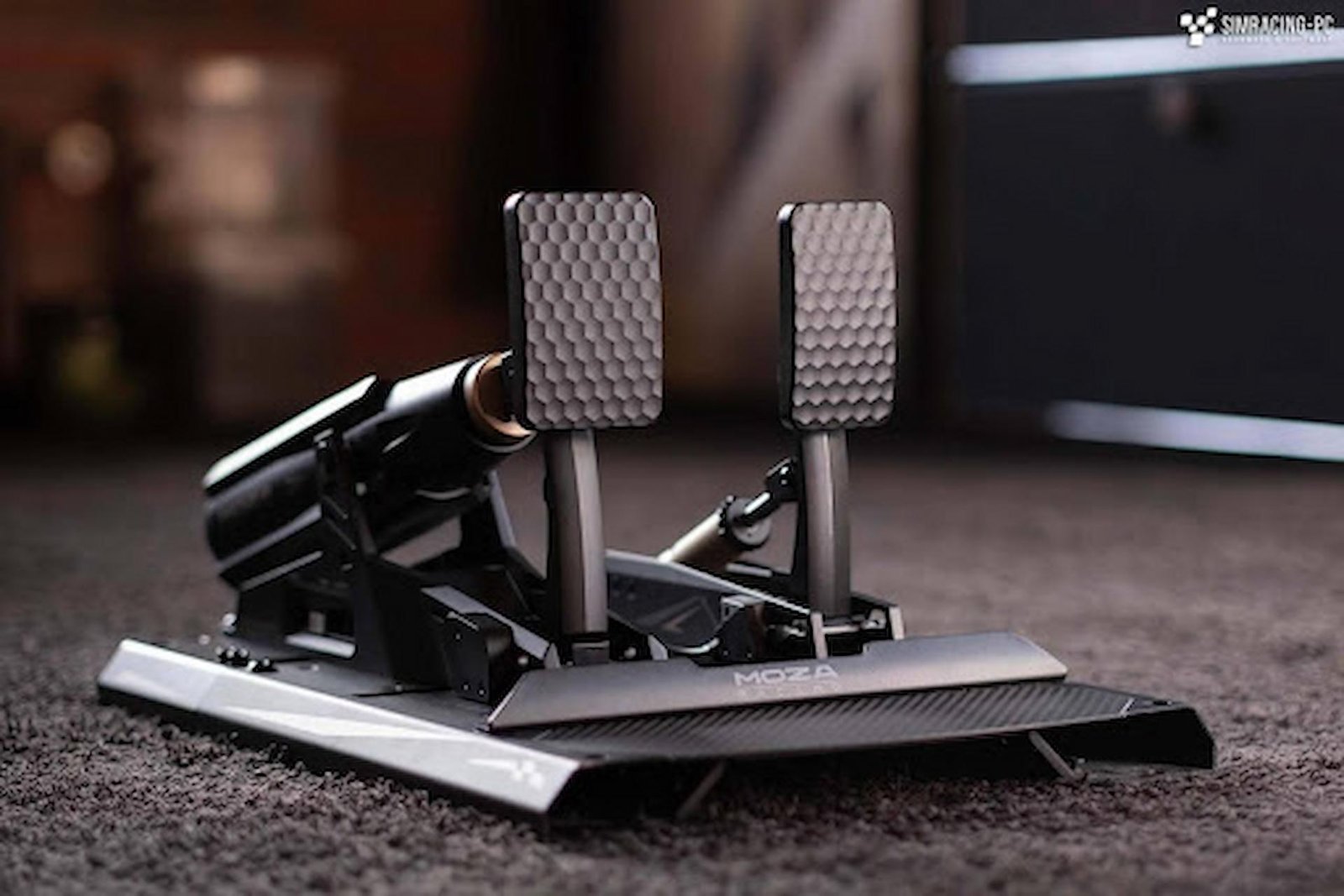
Sim racing is no longer about basic wheels and pedals. Hardware innovation is transforming how virtual driving feels, responds, and immerses players. From precision steering to smarter feedback systems, today’s setups bring racing closer to reality, reshaping how enthusiasts train, compete, and enjoy the track from home.
Sim racing has evolved far beyond a niche hobby. What once felt like an arcade-style experience now mirrors the discipline, focus, and sensory depth of real motorsport. This shift has been driven largely by hardware advances that prioritise realism, responsiveness, and adaptability. From entry-level setups to advanced rigs, the gap between virtual and physical driving continues to narrow—especially with compact direct-drive systems such as Moza R5 appearing early in many sim racing journeys.
Below is a clear look at the most important hardware developments shaping the future of sim racing, explained in simple terms and focused on practical value.
Steering Technology Gets Smarter and Stronger
Direct-drive systems redefine steering feel
The steering wheel is the heart of any sim racing setup. Traditional belt-driven systems relied on pulleys and belts to transfer force, which often softened feedback. Modern direct-drive technology removes those intermediaries. The motor connects straight to the wheel, delivering immediate and accurate resistance.
This results in sharper detail. Subtle changes in grip, surface texture, or weight transfer are easier to feel. Drivers receive information faster, helping them react with more confidence. Compact systems now deliver this experience without the size or power demands once associated with professional rigs.
Force Feedback Becomes More Informative
Feedback now communicates, not just resists
Force feedback is no longer about strength alone. Modern systems prioritise clarity. Instead of simply pulling against the driver, the wheel conveys what the car is doing—when tyres lose traction, when weight shifts under braking, or when a surface change affects grip.
Improved motor control and higher refresh rates mean these signals feel smooth rather than jerky. This makes long sessions more comfortable and reduces fatigue, especially for newer sim racers learning proper steering habits.
Pedals Move Toward Realistic Resistance
Pressure matters more than movement
Pedal design has seen a quiet but significant transformation. Earlier setups relied mainly on distance—how far the pedal moved. Newer designs focus on pressure, especially for braking.
Load-based systems respond to how hard the pedal is pressed, not just how far. This encourages consistent braking and better muscle memory. Even mid-range pedal sets now offer adjustable resistance, allowing drivers to fine-tune comfort and realism without complex tools.
Modular Hardware Supports Growth
Setups now adapt as skills improve
One of the most important shifts in sim racing hardware is modular design. Wheels, pedals, bases, and mounts are increasingly built to work together across upgrades. This allows drivers to start simple and expand over time.
A compact wheelbase like Moza R5 often sits at the centre of this approach. Users can adjust settings, change rims, or upgrade pedals without replacing the entire system. This flexibility lowers long-term costs and reduces the barrier to progression.
Materials Improve Durability and Comfort
Better materials enhance control
Hardware manufacturers now focus heavily on build quality. Aluminium housings improve heat control. Textured grips reduce hand fatigue. Stronger mounting systems prevent flex during intense steering inputs.
These changes are not cosmetic. Reduced vibration loss, stable mounting, and better ergonomics all contribute to more predictable driving. The result is hardware that feels solid under stress and remains reliable during extended use.
Software and Hardware Work as One
Smarter integration improves consistency
Modern sim racing hardware is designed alongside its software. Configuration tools allow users to adjust torque curves, feedback strength, and pedal response with precision. Profiles can be saved and adjusted depending on the type of racing.
This integration ensures hardware behaves consistently across sessions. It also helps drivers understand what they are feeling, making it easier to improve technique rather than fight the equipment.
Compact Power Changes Space Requirements
Performance no longer demands large rigs
In the past, strong force feedback meant bulky motors and heavy frames. Today’s hardware delivers similar performance in smaller footprints. This matters for home users with limited space.
Compact systems allow sim racing to fit into everyday environments without permanent installations. Folding rigs, desk mounts, and lightweight frames now support powerful setups without compromising stability.
Actionable Takeaways for Sim Racers
- Choose hardware that prioritises feedback clarity over raw strength
- Look for modular systems that allow upgrades without full replacement
- Focus on pedal quality, especially braking resistance
- Ensure software tuning tools are easy to use and well supported
- Consider space and mounting options before selecting high-torque equipment
These practical considerations help balance realism, comfort, and long-term value.
The Road Ahead for Sim Racing Hardware
Innovation in sim racing hardware shows no sign of slowing. Advances in motor efficiency, sensor accuracy, and materials continue to refine the experience. The goal is no longer to impress with numbers, but to deliver believable, repeatable driving feedback that supports skill development.
As technology matures, high-quality experiences once limited to professional training environments are becoming accessible at home. Systems like Moza R5 represent this shift—powerful, compact, and designed around user progression rather than excess.
Closing Thoughts
Sim racing hardware has reached a point where realism and accessibility meet. Steering systems now communicate subtle detail. Pedals reward consistency. Modular designs respect long-term growth. Together, these advances reshape how drivers engage with virtual motorsport.
The future of sim racing is not about complexity for its own sake. It is about hardware that feels intuitive, responds predictably, and supports learning. Whether you are refining lap times or simply enjoying immersive driving, today’s technology offers a clearer connection between driver and car than ever before.
If you are planning your next setup or considering an upgrade, focus on balance—feedback quality, adaptability, and comfort matter more than extremes. The right hardware turns sim racing from a game into a genuine driving experience.




Leave a Reply
You must be logged in to post a comment.